Some of the links in this article are "affiliate links", a link with a special tracking code. This means if you click on an affiliate link and purchase the item, we will receive an affiliate commission.
The price of the item is the same whether it is an affiliate link or not. Regardless, we only recommend products or services we believe will add value to our readers.
By using the affiliate links, you are helping support our Website, and we genuinely appreciate your support.
The Problem: Time Constraints and Dietary Goals
In today’s fast-paced world, finding time to prepare healthy meals can be challenging. Many individuals struggle with maintaining a balanced diet due to their hectic schedules. The consequences often include reliance on fast food, unhealthy snacking, and missed nutritional targets. Therefore, the need for effective weekly meal prep ideas becomes key to address these issues.
Why This Matters: Health and Efficiency
Meal prepping not only saves time but also supports dietary goals by ensuring that nutritious meals are readily available. It reduces the stress of daily cooking and minimizes the temptation to opt for unhealthy convenience foods. By investing time in planning and preparing meals in advance, individuals can achieve a healthier lifestyle and better time management.
Solutions: Comparing Weekly Meal Prep Strategies
Option A vs Option B: Batch Cooking vs Ingredient Prep
Let’s compare two popular meal prep strategies: batch cooking and ingredient prep. On one hand, batch cooking involves preparing large quantities of complete meals in advance. The advantages include a straightforward approach and minimal daily effort. However, the drawbacks are the potential for monotony and the need for ample storage space.
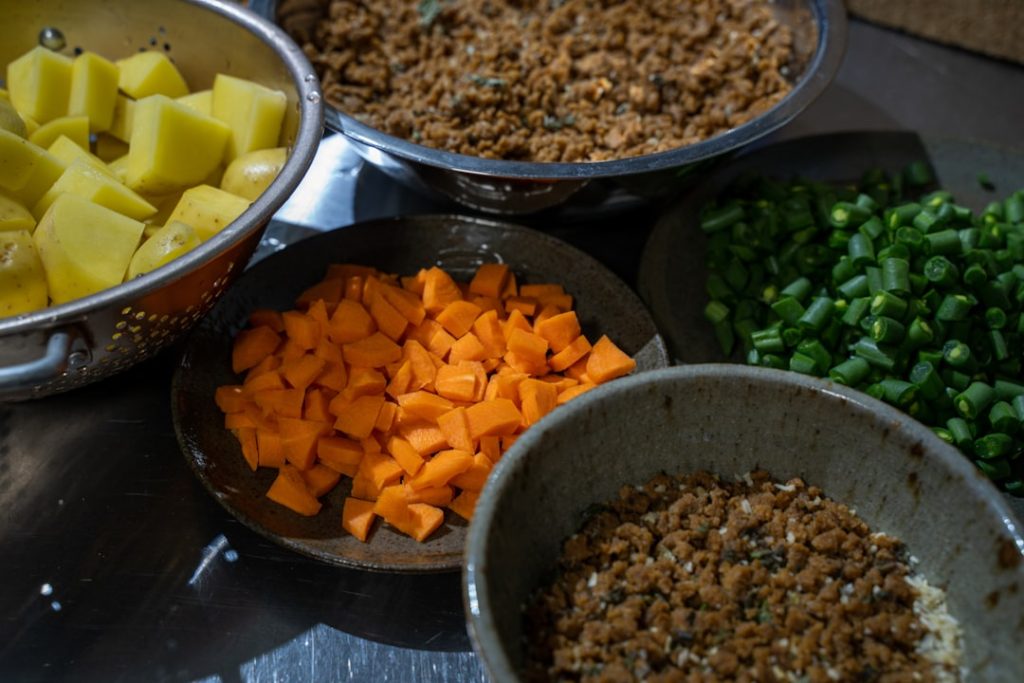
On the other hand, ingredient prep focuses on preparing individual ingredients for quick assembly during the week. The benefits include greater meal variety and flexibility. However, this method requires more daily effort to combine ingredients into meals.
| Strategy | Pros | Cons |
|---|---|---|
| Batch Cooking | Simple, minimal daily effort | Monotony, storage space needed |
| Ingredient Prep | Variety, flexibility | More daily effort |
Option C vs Option D: Pre-portioned Meals vs Freezer Meals
When comparing pre-portioned meals to freezer meals, we find distinct advantages and disadvantages. Pre-portioned meals involve dividing meals into individual servings, ready to grab and go. The advantages include convenience and portion control. However, the drawbacks are the initial time investment and the need for precise planning.
Conversely, freezer meals are prepared in bulk and stored for future use. They offer long-term storage and are great for unexpected busy days. However, they may require defrosting time and can sometimes compromise texture or flavor.
| Strategy | Pros | Cons |
|---|---|---|
| Pre-portioned Meals | Convenience, portion control | Time investment, planning |
| Freezer Meals | Long-term storage, convenience | Defrosting time, texture issues |
Implementation Steps: How to Start Your Meal Prep Journey
- Assess Your Needs: Determine dietary requirements and preferred meal prep strategy.
- Create a Plan: Design a weekly menu and shopping list based on your chosen strategy.
- Allocate Time: Set aside a specific day for meal prep, ensuring enough time for cooking and storage.
- Organize Storage: Use containers and labeling to ensure easy access and portion control.
- Adjust and Optimize: Evaluate your process weekly and make adjustments for efficiency and satisfaction.
Our Recommendation
Based on our evaluation, for those seeking simplicity and minimal daily effort, batch cooking is the winner. However, if variety and flexibility are your priorities, ingredient prep offers a more dynamic approach. Ultimately, the best strategy depends on individual preferences and lifestyle needs.
Leave a Reply